The Truth About Microcrystalline Cellulose: What’s Really in Your Pet’s Supplement Capsule
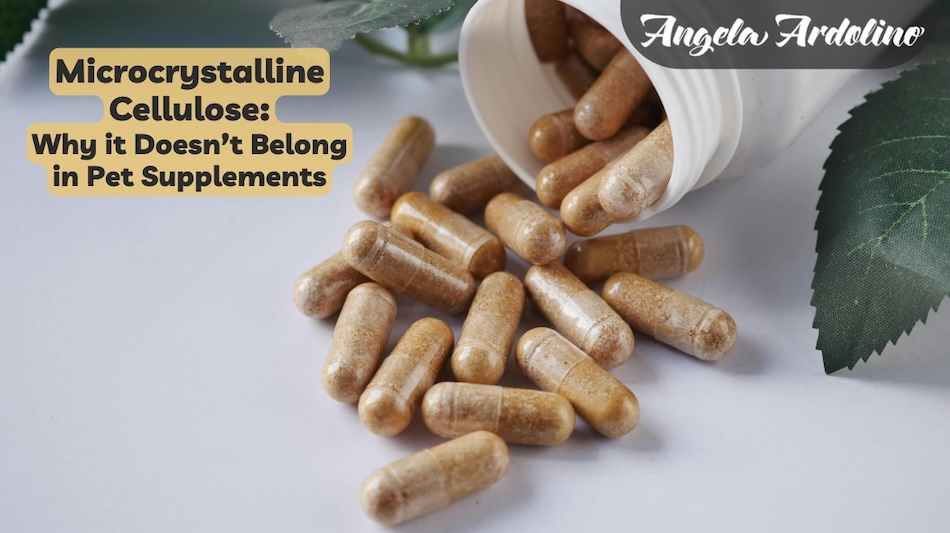
Is microcrystalline cellulose safe for pets? If you’ve checked the label on your pet’s supplement, there’s a good chance you’ve seen this ingredient listed—sometimes as MCC or cellulose gum. But what is microcrystalline cellulose, and why is it in so many “natural” products? Despite its plant-based name, MCC is a highly processed synthetic filler made from wood pulp—and research suggests it may carry more risk than benefit—especially for pets with sensitive digestion or chronic health issues.
What is Microcrystalline Cellulose?
Microcrystalline cellulose (MCC) is a highly processed, purified form of wood pulp. It’s typically derived from cotton, wood, or other plant fibers—most often from hardwood trees. It’s composed of insoluble cellulose, the same indigestible structural material that forms plant cell walls.
Despite sounding harmless—it’s just “plant fiber,” right?—MCC is a cheap bulking agent. It has no nutritional or therapeutic value—and growing research shows it may actually do more harm than good.
Is Microcrystalline Cellulose in Your Pet’s Supplement?
Let’s be clear: Microcrystalline cellulose = wood pulp.
If your pet’s supplement contains MCC, they’re likely ingesting chemically treated wood pulp—not something that offers healing or nutritional support. It’s added to make capsules look full and machines run faster, not to benefit your pet’s health.
 Why is Microcrystalline Cellulose Used?
MCC is used in supplements for one reason: it’s cheap and convenient for manufacturers. Specifically, it:
- Acts as a filler to bulk up capsules and tablets
- Improves flowability for faster production
- Creates uniform capsule size
- Is cheap, odorless, tasteless, and FDA-approved
In other words, MCC is used to fill space and make a product look full—not because your pet needs it or benefits from it. In some pet supplements, up to 50% of a capsule can be made of fillers like MCC.
Is Microcrystalline Cellulose Safe?
Although MCC is listed as “generally recognized as safe” (GRAS) by the FDA, that doesn’t mean it’s risk-free. Especially when it’s used daily, or given to animals with existing sensitivities, inflammation, or chronic disease.
Microcrystalline Cellulose Side Effects: What the Research Says
1. Disrupts Gut Health
- Irritates the gut lining: Especially in sensitive pets or those with leaky gut, inflammatory bowel disease (IBD), or food sensitivities.
- Feeds the wrong microbes: Insoluble fibers like MCC are not prebiotic and may support dysbiosis (imbalanced gut flora), contributing to chronic inflammation.
- A 2015 study published in Nature found that synthetic emulsifiers and additives (including MCC) alter the gut microbiome and promote metabolic syndrome and low-grade inflammation in mice.
“The consumption of dietary emulsifiers induces low-grade inflammation, obesity, and metabolic syndrome.” – [Chassaing et al., 2015, Nature]
2. Adds to Toxic Load
- MCC is chemically treated to make it pharmaceutical-grade.
- It can be contaminated with solvents or heavy metals, depending on the manufacturer.
- Adds non-nutritive bulk that the liver and kidneys must work harder to eliminate.
3. Interferes with Nutrient Absorption
- MCC may bind with minerals in the gut and prevent proper absorption.
- Especially dangerous when combined with synthetic vitamin isolates—your pet may get even less nutrition than you think.
4. Contributes to “Fake Fullness”
- By adding bulk without substance, MCC tricks the consumer into thinking they’re getting a full therapeutic dose.
- But what’s inside might be half filler, not medicine.
Microcrystalline Cellulose in Natural Pet Supplements
If you’re buying a natural or holistic product, this shouldn’t be in it. Period.
It doesn’t help heal, support, nourish, or protect. It’s a cheap trick that:
- Makes a capsule look full
- Increases profit margins
- Offers zero benefit—and real risk
And yet, it’s everywhere—especially in the most popular vet-recommended pet supplements.
How to Spot Microcrystalline Cellulose in Pet Supplements
If you see any of these on the label, put the bottle down. They’re all variations of the same synthetic filler:
- Microcrystalline Cellulose
- MCC
- Cellulose Gum
- Powdered Cellulose
- Cellulose Gel
Final Thoughts: Is Microcrystalline Cellulose Safe for Pets?
The supplement industry doesn’t want you to ask questions like “what is microcrystalline cellulose?” or “is microcrystalline cellulose safe?”—because the answers reveal just how much cheap filler is hiding in supposedly “premium” products.
But if we want better health for our pets, we have to demand better ingredients.
Microcrystalline cellulose is not harmless. It’s not just “fiber.”
It’s processed wood pulp that your pet’s body doesn’t need—and may struggle to eliminate.
If your pet’s supplement contains MCC, you’re paying for filler and risking potential side effects.
Let’s stop normalizing this.
Let’s stop letting wood pulp pass as medicine.
And let’s choose clean, functional ingredients—because our pets deserve better.
A bout Angela Ardolino
Angela Ardolino, a certified cannabis and fungi clinician, brings over 20 years of expertise to the field of holistic pet wellness. As a graduate of the inaugural Medical Cannabis for Therapeutic Use program at the University of Vermont School of Medicine, she is a passionate advocate for safe, natural, and ethically-grown whole plant and fungi medicine tailored for pets.
Committed to the highest standards, Angela continues to educate and inspire pet parents through her popular podcast, Your Natural Dog, where she hosts experts to discuss holistic pet care, natural remedies, nutrition, and training. Follow Angela Ardolino on Facebook, Instagram, TikTok, and YouTube to stay updated on her mission to educate and empower pet parents everywhere.