The Turmeric Debacle: How We Took a Healing Root and Made It Hepatotoxic
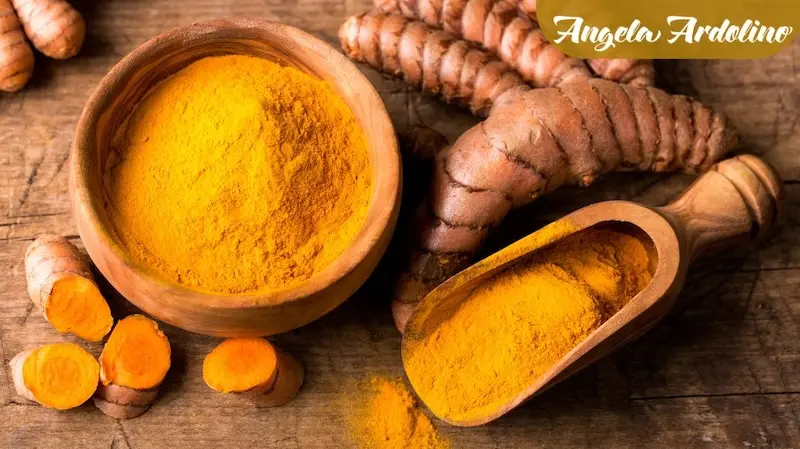
Why concentrated curcumin extracts, and the black pepper added to “boost” them, may be quietly taxing your dog’s liver
Turmeric is one of the most beloved healing roots on the planet. We cook with it, make golden paste with it, and feed it to our dogs for inflammation and pain. I’m a believer. I’ve used it in my practice for years. So let me say this clearly before we go any further: this is not an article telling you turmeric is bad.
This is an article about what happens when we take something nature already got right and decide we can do better in a lab.
Because there’s an uncomfortable trend moving through the medical literature right now. People are landing in hospitals with liver injury from turmeric. Not from the spice in their curry, and not from the root in their dog’s bowl. From concentrated curcumin extracts, very often the ones formulated with black pepper to drive more of it into the bloodstream.
Once you understand why, you won’t read a “95% curcuminoids” label the same way again.
Turmeric is not curcumin
This is the distinction the supplement industry blurs, and it’s where the whole problem begins.
Whole turmeric root is only about 2 to 5% curcumin by weight. The other 95% isn’t filler. It’s hundreds of compounds working together: turmerones and other essential oils, fiber, resins, the other curcuminoids, trace minerals. Curcumin is the loudest voice in that chorus, but it was never meant to sing alone.
Then the industry asked a very modern, very reductionist question. If curcumin does most of the work, why not just sell curcumin? And so we got extracts standardized to 95 and 97% curcuminoids, concentrating that one compound to twenty or forty times what the root actually contains, and discarding everything else the plant packed around it.
That’s the move I need every pet parent to see for what it is. We didn’t make turmeric stronger. We took it apart.
The body handled the whole root just fine. It doesn’t know what to do with the isolate.
Here’s something that should give you pause, and it doesn’t come from a holistic blog. It comes straight from LiverTox, the NIH’s own database on drug-induced liver injury.
On its own, curcumin is poorly absorbed and quickly cleared out of the body. Your dog takes what it needs from the root and passes the rest. Everyone in the supplement world treats that poor absorption as a flaw to engineer around. I see it differently. That slow, partial absorption is the body’s natural rate limiter, the same gentle metering that lets us eat whole foods every day without harm.
LiverTox lays it out directly: because curcumin is so poorly absorbed on its own, “concentrated forms with altered means of absorption have been developed,” and this “may explain the recent increase in reports of liver injury with its use.” [1]
Sit with what that means. The federal government’s toxicology reference is pointing at the engineering, the concentration and the forced absorption, and not at the plant.
Flood the system with forty times the natural dose of a single isolated compound, stripped of every cofactor that normally rides along with it, and you hand the liver a job the root never asked it to do.
Then we made it worse with black pepper
If concentration started the fire, piperine is what poured gas on it.
You’ve seen the marketing. “Now with black pepper for enhanced absorption!” It sounds clever and natural, almost folksy. It is neither harmless nor folksy.
Piperine, the active compound in black pepper, works by shutting down the very enzymes in the gut and liver that clear foreign compounds out of the body (the glucuronidation pathways, if you want the technical name). Put plainly, it jams the body’s disposal system so more curcumin stays in circulation, for longer.
How much more? Piperine can raise curcumin’s bioavailability by as much as 2,000%. [2]
Think about what we’ve actually built here. We took a compound the body was deliberately holding at arm’s length. We concentrated it twenty to forty times. Then we added a second compound whose whole purpose is to disable the body’s ability to get rid of it. That’s three separate overrides of the plant’s own design, stacked one on top of another, and the liver absorbs all of it.
This isn’t a theory. Several documented cases of turmeric-related liver injury involve the turmeric-piperine combination specifically. [2][3] In one 2023 case, a woman taking a liquid turmeric supplement labeled at 2 grams of curcumin a day developed severe liver injury, with enzymes running more than thirty times above normal. [4] The literature now names turmeric as a growing cause of supplement-related liver injury, and the piperine-containing products keep turning up in the worst cases. [3][5]
And we still haven’t talked about what’s actually in the bottle
There’s one more layer, and it’s the one that makes me angriest as someone who reads labels for a living.
Concentrated extracts are processed, often imported, and almost entirely unregulated. That opens the door to contamination, and it’s not hypothetical. Investigators have found lead chromate, an industrial yellow pigment used to make turmeric look richer and more golden, in certain turmeric products. [6] When a heavy metal like that hitches a ride alongside concentrated curcumin, it adds to the liver’s load and makes it nearly impossible to say which insult did the damage.
So one “premium” curcumin capsule can carry all of it at once: a 20 to 40 times concentration, an absorption enhancer that blocks clearance, and a possible dose of lead. That’s not a supplement anymore. That’s a chemistry experiment, and it’s running on your dog’s liver.
This is so much bigger than turmeric
I’m leaning on turmeric because it’s the cleanest example, but this pattern is sitting all over the supplement shelf. National Geographic captured the backdrop well in its reporting on the supplement boom: usage has exploded, the industry runs with very little pre-market oversight, and the safety science is scrambling to catch up. [7] Herbal and dietary supplements now account for a real and rising share of drug-induced liver injury in this country. [3]
The products I worry about most always share the same fingerprints. Isolated compounds. Concentrated far past anything you’d find in nature. Cut with synthetics and fillers. Then “enhanced” with some absorption trick. Every one of those decisions drags a substance further from food and closer to a drug, with none of the safety testing we’d ever demand of a real drug.
Combine isolates, force them past the body’s defenses, and pad them out with fillers the gut has to wade through, and you get exactly the slow, low-grade burden on the liver and digestive tract that I’ve watched catch up with dogs over the years. It hits the seniors hardest, and the dogs already fighting something else.
More is not better: do the math
This is the part I most want you to sit with, because it flips the logic most people use.
A teaspoon of whole turmeric root powder is about 2 grams. At turmeric’s natural 2 to 5% curcuminoid content, that teaspoon delivers somewhere around 40 to 100 mg of curcuminoids — and they arrive slowly, wrapped in fiber and oils, with the body’s clearance system working exactly as designed.
Now look at a typical concentrated curcumin pet product standardized to 95-97% curcuminoids. One of the popular ones delivers roughly 960 mg of that extract per teaspoon scoop, dosed up to a full teaspoon twice a day for a larger dog. That’s on the order of 900-plus mg of curcuminoids a day — ten to twenty times the load of a comparable whole-root teaspoon — and it’s pushed through with added piperine that disables the body’s ability to clear it.
Stop and let that contradiction land. When something is concentrated, the dose should go down, not up. You don’t pour a shot glass of espresso for every cup of coffee a recipe calls for. Yet the concentrated isolate is routinely given at a higher effective dose than the gentle whole root, with the brakes cut. That’s backwards, and it’s the heart of the problem.
And here’s who actually receives these products: not healthy young dogs. Nobody buys a joint, brain, or longevity supplement for a vibrant two-year-old. These go to the senior dog and the dog already managing a health issue — the exact animals with the least liver reserve, the least detox buffer, and very often a list of medications that piperine can also interfere with. We are loading the highest, most aggressively absorbed dose onto the patients least equipped to handle it.
So what does a compromised or aging liver do when it meets that concentration every single day? At food-level doses, curcumin is an antioxidant and the liver clears it easily. At high, sustained, piperine-boosted doses, that same molecule can tip into a pro-oxidant, draining the liver’s glutathione — its master detox reserve — instead of supporting it. Day after day, on the dogs with the thinnest margin. That is the quiet burden I want every pet parent to understand.
What “natural” actually means here
Let me be precise, because precision is what protects your dog.
Natural does not mean harmless. Plenty of plants are potent, and a few will hurt you. What natural means in this conversation is whole: in its original ratios, with its cofactors intact, at a dose the body knows how to pace itself through. Whole turmeric root is lower-risk not because the universe is kind, but because it’s dilute. A little curcumin, cradled inside the full matrix the plant grew around it, arriving slowly enough that the liver keeps up.
The isolate is riskier for the mirror-image reasons. Concentrated, stripped, and forced through. Same molecule, an entirely different relationship with the body.
That’s the lesson in one line. This was never “curcumin is bad.” It’s that curcumin was never meant to show up alone, at forty times the dose, with the body’s exits nailed shut.
What I want you to do instead
Choose the whole root, or a full-spectrum extract of the whole root. Never the isolate. This is the distinction that matters more than any other, so I want to be exact about it, because not every extract is the villain here.
There are two good ways to give your dog turmeric. The first is the simplest there is: organic whole turmeric root, dried and powdered, curcumin still sitting in its natural 2 to 5% home with all its cofactors.
The second is a full-spectrum extract of the root, and this is the one I reach for in my own formula. A full-spectrum extract concentrates the whole plant, the curcumin together with the turmerones, the other curcuminoids, the oils and cofactors, all in the ratios nature put them in. That is the opposite of a standardized curcumin isolate. One turns up the volume on the entire chorus. The other fires every singer but one. They both say “extract” on the label, and they could not behave more differently once they’re inside your dog. The word that protects you isn’t “extract.” It’s whole versus isolated.
I’ll tell you why I trust the full-spectrum version, beyond the theory. I’ve used full-spectrum turmeric in my practice for more than ten years, mostly with my senior cases, the dogs coming to me stiff, sore, and slowing down from chronic inflammation. Whole-plant turmeric has been one of my most reliable tools for those dogs, and I’ve never seen it create the kind of problems the concentrated isolates are now being tied to.
There’s also a reason it pairs so beautifully with organic CBD, which I use constantly alongside it. CBD is one of the only dietary compounds known to engage the body’s CB2 receptor directly, the receptor tied closely to inflammation. When you bring whole-plant turmeric and CBD together, you’re letting two of nature’s most powerful anti-inflammatory tools work alongside each other the way nature intended. That’s exactly the philosophy behind my formula, an organic CBD for dogs with turmeric and frankincense, and why I’ve trusted that combination with my senior cases for years.
Be very skeptical of “95-97% curcuminoids.”
That number is not a quality badge. It’s the signature of an isolate. It’s telling you, right on the label, that one compound has been concentrated past anything in nature and the rest of the plant is gone. A true full-spectrum extract won’t advertise a number like that, because cornering a single molecule was never the point.
Read “with black pepper,” “piperine,” or “BioPerine” as a warning, not a selling point.
This goes double if your dog takes any medication, because the same enzyme-blocking that supercharges curcumin can also raise the levels of other drugs in the body.
Ask for a Certificate of Analysis with heavy-metal testing on anything turmeric-based.
Given turmeric’s contamination history, this isn’t fussy. It’s basic protection.
And put every supplement through the same simple question.
Is this whole food, or an isolate dressed up to look like one? Does it need a trick to get into the body? And what is my dog’s liver going to have to do with whatever’s left over?
Real healing was never about cornering one molecule and forcing it past the body’s defenses. It comes from whole foods, whole plants, and whole mushrooms, given the way nature assembled them, at doses the body recognizes as food.
Turmeric was a gift. We didn’t need to improve it. We needed to leave it whole.
Want to see how the great healing traditions actually used this root?
For thousands of years, both Traditional Chinese Medicine and Ayurveda used whole turmeric — never an isolate, always in modest amounts, almost always combined with other herbs and prepared with intention. Neither tradition ever needed 97% anything.
[Download my companion guide: How TCM and Ayurveda Use Turmeric for Animals]
References
[1] National Institutes of Health, LiverTox: Clinical and Research Information on Drug-Induced Liver Injury. “Turmeric.” NCBI Bookshelf, NBK548561. (Notes that curcumin is poorly absorbed and rapidly excreted, and that concentrated forms with altered absorption “may explain the recent increase in reports of liver injury.”)
[2] Koo N, Kambhampati H, Herman M. “Drug-Induced Liver Injury Secondary to Turmeric Supplement Containing Piperine: A Case Report.” Cureus. 2025. (States piperine inhibits hepatic and intestinal glucuronidation and can increase curcumin bioavailability by up to 2,000%.)
[3] Halegoua-DeMarzio D, Navarro V, Ahmad J, et al. “Liver Injury Associated with Turmeric — A Growing Problem: Ten Cases from the Drug-Induced Liver Injury Network [DILIN].” American Journal of Medicine. 2023;136:200-206.
[4] “A Case of Turmeric-Induced Liver Injury.” Annals of Internal Medicine: Clinical Cases. 2023. (Patient taking ~2 g curcumin extract daily presented with hepatocellular injury; AST/ALT 1319/915 IU/L.)
[5] “Turmeric-Induced Liver Injury.” Journal of Brown Hospital Medicine. 2025. (Biopsy-proven DILI after initiating a turmeric supplement, resolving after discontinuation.)
[6] Forsyth JE, et al., research identifying lead chromate adulteration of turmeric as a source of lead exposure; also cited in Koo et al. (ref 2).
[7] Pattillo, Alexandra. “Should you be worried about the supplements you’re taking?” National Geographic, February 2025. (Background on the growth of the supplement market, limited pre-market regulation, and the rise in supplement-linked liver injury.)
This article is educational and reflects my perspective as an herbalist and holistic pet care practitioner.
About Angela Ardolino
 Angela Ardolino, a certified cannabis and fungi clinician, brings over 20 years of expertise to the field of holistic pet wellness. As a graduate of the inaugural Medical Cannabis for Therapeutic Use program at the University of Vermont School of Medicine, she is a passionate advocate for safe, natural, and ethically-grown whole plant and fungi medicine tailored for pets.
Committed to the highest standards, Angela continues to educate and inspire pet parents through her popular podcast, Your Natural Dog, where she hosts experts to discuss holistic pet care, natural remedies, nutrition, and training. Follow Angela Ardolino on Facebook, Instagram, TikTok, and YouTube to stay updated on her mission to educate and empower pet parents everywhere.